Among individuals who identify as targeted individuals (TIs), a persistent and controversial belief is that intelligence agencies and their intermediaries recruit undocumented immigrants to participate in organized surveillance, stalking, intimidation, and psychological harassment. According to this theory, individuals whose immigration status makes them vulnerable to exploitation may be particularly attractive to clandestine operations because their identities, employment histories, and movements can sometimes be difficult to verify. Some targeted individuals allege that participants operate under assumed names, provide false biographical information, or conceal their actual places of birth, creating additional obstacles for anyone attempting to establish their identities. These allegations remain unsubstantiated as a widespread intelligence practice, but they raise broader questions about accountability, exploitation, and the potential abuse of vulnerable populations.
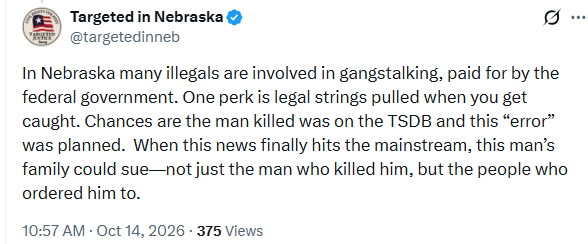
Another recurring allegation concerns how these purported participants are compensated. Targeted individuals frequently describe arrangements involving prepaid gift cards, cash payments, transportation, housing assistance, and other benefits that allegedly leave little conventional financial documentation. The theory is that such compensation could obscure the identity of whoever finances an operation, particularly if intermediaries are used to distribute payments. However, gift cards and cash are not necessarily untraceable; investigators can sometimes reconstruct transactions through purchase records, surveillance footage, electronic communications, and other evidence. Nor is there verified evidence establishing that American intelligence agencies systematically compensate undocumented immigrants to harass civilians. Nevertheless, the broader concern about covert financing deserves consideration because financial opacity can complicate efforts to identify who authorized, funded, or benefited from unlawful activities.
At the center of these suspicions is a concept familiar to intelligence professionals: plausible deniability. Intelligence organizations have historically employed intermediaries, informants, contractors, and proxy networks to conduct sensitive operations while limiting direct institutional exposure. That documented history helps explain why some targeted individuals suspect similar arrangements could be used against ordinary Americans. In their view, recruiting people with uncertain or difficult-to-verify identities, compensating them indirectly, and maintaining several layers of separation between participants and government officials would create an especially effective shield against accountability. Yet the existence of covert methods in legitimate intelligence operations does not establish that the specific gangstalking arrangements alleged by targeted individuals are occurring. Distinguishing historical precedent from contemporary allegations is essential to any credible investigation.
The controversy also raises an important ethical question about undocumented immigrants themselves. Individuals lacking secure immigration status can be vulnerable to coercion, financial exploitation, and threats involving deportation. If government personnel or private intermediaries were ever found to have exploited those vulnerabilities to recruit participants for unlawful surveillance or harassment, the consequences would be serious for both the alleged victims and the individuals pressured into participating. At the same time, immigration status must never be treated as evidence of criminal conduct. The overwhelming majority of undocumented immigrants should not be implicated by accusations directed at unidentified individuals. Any legitimate investigation would need independently verifiable evidence, including financial records, communications, witness testimony, and documented connections to identifiable officials or organizations.
Ultimately, the issue deserves neither automatic acceptance nor reflexive dismissal. Allegations that intelligence agencies secretly finance civilian harassment through undocumented intermediaries are serious and require equally serious evidence. If substantiated, such operations could raise profound constitutional questions involving privacy, due process, civil liberties, and government accountability. If unsupported, the allegations risk unfairly stigmatizing immigrant communities and diverting attention from demonstrable wrongdoing. Plausible deniability must never become a substitute for accountability, but neither can the mere possibility of plausible deniability serve as proof of a conspiracy. For targeted individuals seeking answers, the strongest path forward remains transparent investigation, independently corroborated evidence, and meaningful oversight capable of establishing what actually happened, who was responsible, and whether any laws were violated.
Leave a Reply