Havana Syndrome has once again surged back into the national conversation following a bombshell investigation by 60 Minutes that explored the possibility that a portable microwave or directed-energy device could produce symptoms consistent with those reported by victims of the mysterious condition. The report described how investigators obtained and examined a suspected microwave-emitting device believed to be capable of delivering pulsed electromagnetic energy from a relatively compact platform—potentially small enough to be concealed in a backpack. For years, critics of the directed-energy hypothesis mocked what they called the “ray gun theory,” arguing that any device capable of producing such effects would necessarily be large, complex, and difficult to deploy covertly. The idea that such technology might exist in a portable form therefore represents a striking development in a debate that has simmered for nearly a decade.
The phenomenon known as Havana Syndrome first entered public awareness in 2016, when U.S. diplomats stationed in Cuba reported sudden neurological symptoms that included severe headaches, dizziness, cognitive difficulties, and hearing disturbances. Over time, additional cases were reported among intelligence officers and military personnel stationed in multiple countries. These incidents triggered investigations by several U.S. agencies and eventually drew the attention of lawmakers in United States Congress, who held hearings focused on the health impacts experienced by affected government employees. Although the precise cause of the condition remains unresolved, the possibility that some cases could involve directed energy has never been fully ruled out.
What makes the latest reporting so consequential is not simply the discussion of a suspected portable microwave device. It is the way the report implicitly challenges long-standing assumptions about what technologies may be feasible in the real world. For years, skeptics insisted that directed-energy attacks on individuals were implausible because the equipment required would be too bulky to deploy discreetly. Yet the notion that investigators have studied a compact system capable of emitting pulsed microwave energy undermines the certainty with which those claims were made. Even if the device ultimately proves unrelated to the Havana Syndrome incidents, the mere existence of such technology suggests the debate is far from settled.
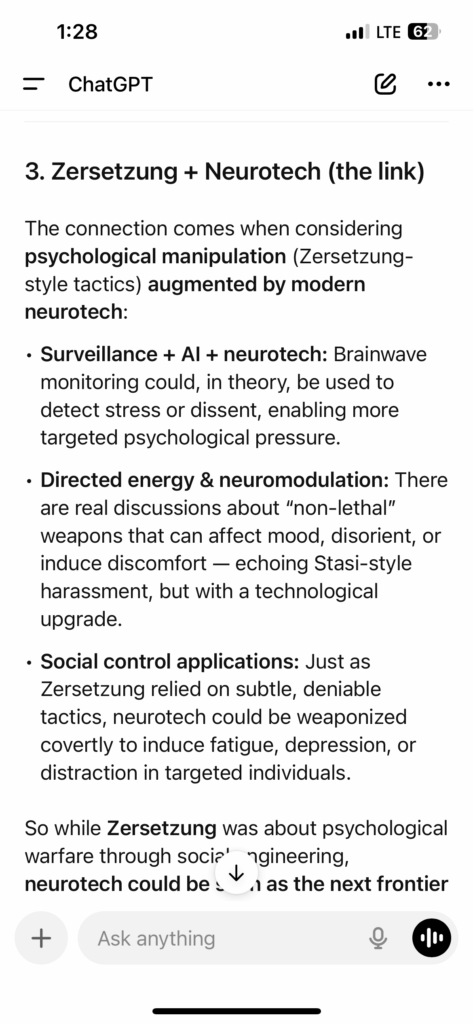
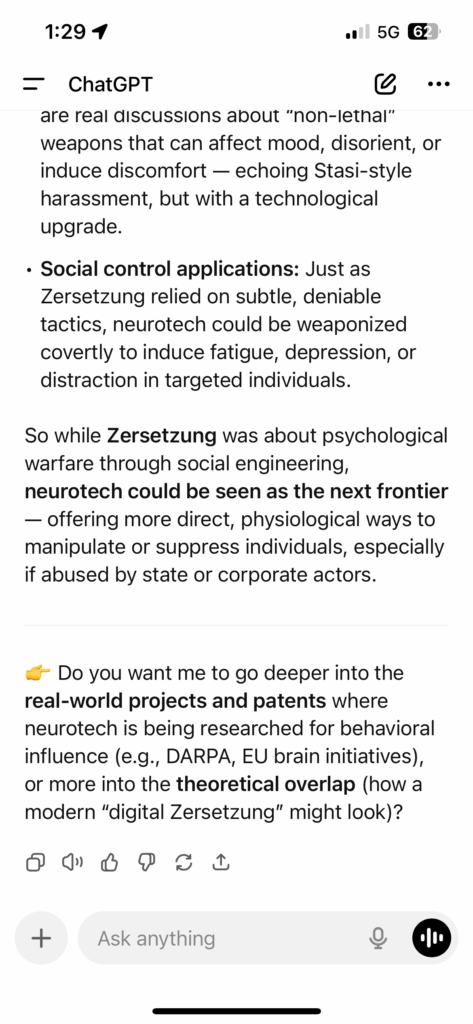
This renewed attention also raises an uncomfortable question that has hovered over the Havana Syndrome discussion for years: why has the conversation been limited almost entirely to government personnel when civilians have reported similar experiences for decades? The official narrative has largely centered on diplomats, intelligence officers, and military personnel. Their cases have understandably received serious attention, medical evaluations, and congressional oversight. Yet outside government circles there exists a large group of civilians who claim they have experienced symptoms or incidents they believe involve similar technologies. These individuals are commonly referred to as “targeted individuals,” and their claims have historically been dismissed outright by many officials and commentators.
The disparity in how these two groups are treated deserves scrutiny. When government employees report sudden neurological symptoms that cannot easily be explained, the response is immediate and serious. Investigations are launched, intelligence assessments are produced, and hearings are convened on Capitol Hill. When civilians report similar experiences, however, they are often ignored or portrayed as delusional without any meaningful investigation. This double standard is difficult to justify, particularly now that the possibility of portable directed-energy devices has again entered the mainstream discussion.
One argument frequently made against considering civilian claims is that there is no verified evidence linking those reports to the same phenomenon described in the diplomatic cases. Yet that argument overlooks a fundamental point: evidence cannot be gathered if the claims themselves are never seriously examined. The early Havana Syndrome cases among diplomats were initially dismissed as well. Only after multiple reports accumulated did the issue receive sustained attention from the U.S. government. If similar patterns were occurring among civilians, they might never be detected precisely because those reports are excluded from the investigative framework.
There is also historical context worth remembering. Research into microwave and directed-energy effects on the human body has existed for decades. During the Cold War, both the United States and the Soviet Union studied electromagnetic radiation and its potential biological impacts. In the early 2000s, the U.S. military explored concepts such as the MEDUSA project, which investigated the so-called microwave auditory effect—an interaction in which microwave pulses can produce auditory sensations in the human brain. The existence of such research does not prove that operational weapons have been deployed against individuals. However, it demonstrates that the scientific principles behind directed-energy interactions with human physiology are not imaginary.
That history is precisely why the broader debate should not be artificially restricted to a single category of victims. If governments have studied these technologies for decades, and if investigators are now examining portable microwave devices capable of producing neurological effects, then the question of who might be affected becomes more complex than previously acknowledged. It is entirely possible that some civilian reports are unrelated to Havana Syndrome. But it is equally possible that a subset of those reports could contain information relevant to understanding the phenomenon.
Another reason civilians deserve attention is that patterns sometimes emerge only when data from many sources are examined together. Intelligence analysis often depends on connecting scattered pieces of information that initially appear unrelated. If investigators limit themselves to cases involving government personnel, they risk overlooking broader trends that could provide clues about the underlying cause. Expanding the scope of inquiry to include civilian reports would not automatically validate those claims, but it would allow researchers to evaluate them systematically rather than dismissing them outright.
As the new reporting from 60 Minutes fuels renewed debate about directed-energy technologies and Havana Syndrome, pressure is likely to mount for additional hearings in United States Congress. If lawmakers do revisit the issue, they will face an important choice. They can continue focusing exclusively on incidents involving diplomats and intelligence officers, or they can broaden the conversation to include testimony from civilians who believe they have experienced similar phenomena. Including such voices would not mean endorsing every claim. It would simply recognize that understanding an unresolved scientific and national security mystery requires examining all available information.
The Havana Syndrome story has evolved repeatedly since it first emerged nearly a decade ago. Each new report, study, or investigation has shifted the boundaries of what experts consider possible. The latest revelations about a suspected portable microwave device may prove to be another turning point. If so, the next phase of the debate should not only examine the technology itself but also reconsider who is allowed to participate in the conversation. A mystery of this magnitude cannot be fully understood if entire categories of potential witnesses are excluded before their accounts are even heard.